

UroLift
UroLift BPH Treatment
 The UroLift ® System is a new, minimally invasive approach to treating BPH for patients looking for an alternative to drug therapy or more invasive surgery. The UroLift System is a straightforward procedure that utilizes tiny implants to lift and hold the enlarged prostate tissue out of the way so it no longer blocks the urethra. There is no cutting, heating or removal of prostate tissue.
Clinical data has proven that the UroLift System treatment is safe and effective and can improve BPH symptoms 3 to 4 times greater than with medication. Results have shown durability to two years with no impact to sexual function. The goal is to relieve you of bothersome urinary symptoms so you can get back to your life and resume daily activities.
Most common adverse events reported include hematuria, dysuria, micturition urgency, pelvic pain, and urge incontinence. Most symptoms were mild to moderate in severity and resolved within two to four weeks after the procedure.
Benefits of the UroLift® System
UroLift possesses many advantages over traditional treatment methods, the primary being that no cuts or sutures are required with UroLift. A local anesthetic is typically all that patients need during their insertion procedure, and they can often return home soon after they are treated for BPH. This same-day procedure is performed right in our convenient office locations in Alexandria and Woodbridge, Virginia.
Results of UroLift are also long-lasting. No maintenance is needed, which gives patients the ability to quickly return to their regular activities with renewed control over their urinary system.
What To Expect
How Does the UroLift® System Work?
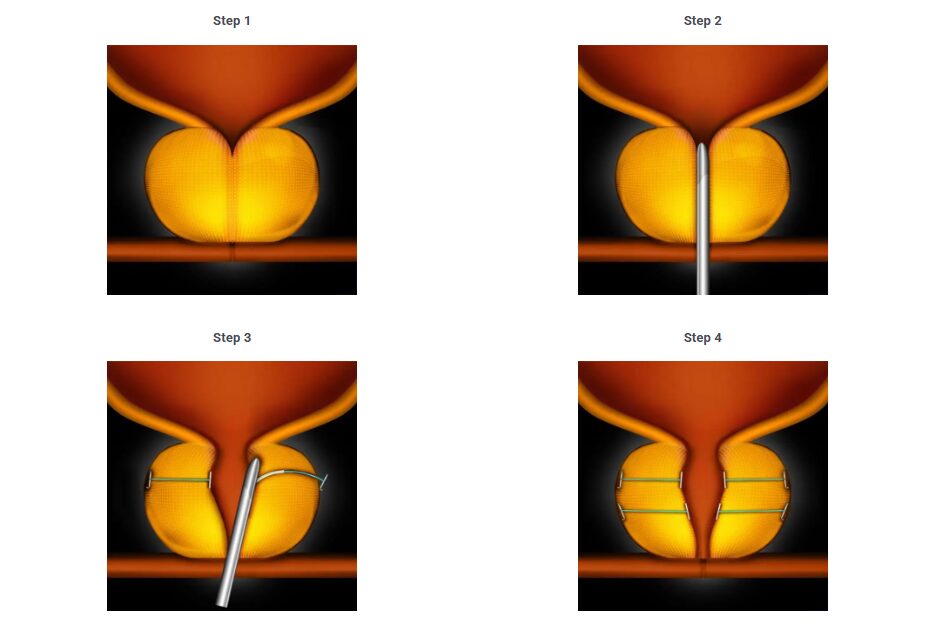
- An enlarged prostate compresses on the urethra, making it difficult for urine to flow
- The UroLift® device is placed through the obstructed urethra to access the enlarged prostate.
- The device compresses the tissue and delivers tiny implants to lift and hold prostate tissue out of the way, thus opening the urethra. The permanent implants keep the tissue in place, like tiebacks on a window curtain.
- The UroLift® device is removed, leaving an open urethra for urine to flow.
Frequently Asked Questions
What is the UroLift ® System?
The UroLift ® System is a new minimally invasive treatment designed to treat lower urinary tract symptoms (LUTS) due to benign prostatic hyperplasia (BPH).
How Does the UroLift® System Work?
Content goes here ..The UroLift System consists of a delivery device and tiny permanent implants. FDA cleared in 2013, this unique technology works by directly opening the urethra with tiny implants that hold the enlarged tissue out of the way, like tiebacks on a window curtain. No cutting, heating, or ablating tissue is involved, making the UroLift System the first and only BPH treatment that does not remove prostate tissue and does not negatively impact a man’s sexual function.
How do I know if the UroLift System treatment is right for me?
The UroLift System is a new treatment option for BPH patients who are looking for an alternative to drugs or major surgery. You may be considering or scheduled for a TURP/Laser treatment, or are unhappy with or have stopped taking medications. The UroLift System is appropriate for patients seeking a minimally invasive treatment and are concerned about preserving their sexual function and their quality of life.
What should I expect during the UroLift System treatment?
If you and your doctor decide that the UroLift System treatment is right for you, your doctor will provide the specific, detailed information relating to your condition. In general, the UroLift System is a minimally invasive treatment that entails minimal downtime. Your doctor will use the UroLift delivery device to deploy permanent implants to relieve obstruction caused by the enlarged prostate that is pressing on your urethra. The procedure may be performed under local or general anesthesia and you may be given medication to feel comfortable during the treatment. Typically, no catheter and no overnight stay is required post-treatment.
What happens post-treatment, during the recovery period?
After the treatment, almost all patients go home the same day without a catheter. There is minimal downtime post-treatment and many patients experience symptom relief in as early as 2 weeks. Patients may experience some urinary discomfort during the recovery period. Most common adverse events reported include hematuria, dysuria, micturition urgency, pelvic pain, and urge incontinence. Most symptoms were mild to moderate in severity and resolved within two to four weeks after the procedure. Your doctor will discuss with you how quickly you can return to your normal physical activities.
Will having the UroLift System treatment affect my sexual function?
Sexual function has been preserved among the hundreds of patients treated in our clinical studies. This is a unique benefit of the UroLift System treatment compared with other BPH therapies such as TURP, laser, and even medication.
Is the treatment permanent?
The UroLift Implant is a permanent implant, and the treatment is intended to be permanent. Durability has been shown to at least 3 years in U.S. clinical data, and results will continue to be published as follow-ups continue. One unique aspect of the UroLift System is that it does not preclude retreatment or other BPH treatments, should that be needed and desired in the future.
What happens if the implants need to be removed?
The implant is made up of standard surgical implantable materials: a nitinol capsular tab, a stainless steel urethral tab, and polyester suture that holds the two tabs together. Your doctor can simply remove the implant, if needed. The suture can be cut and the urethral endpiece can be retrieved with a standard grasper. The capsular tab will remain outside the prostate capsule in place.
Are there any contraindications?
Content goes here ..
The UroLift System should not be used if you have:
- Prostate volume of >100 cc
- A urinary tract infection
- Urethra conditions that may prevent insertion of delivery system into bladder
- Urinary incontinence due to incompetent sphincter
- Current gross hematuria
- If you have a known allergy to nickel, titanium or stainless steel, talk to your doctor about your allergy before getting a UroLift System procedure
Will the implants interfere with having an MRI?
The implant may affect future MRIs of the prostate and may not be the best option if you have a higher risk of prostate cancer or an elevated PSA.
Schedule a BPH Treatment Consultation
Discover the difference Optilume® BPH can make in restoring your quality of life. Give us a call at (703) 680-2111 or book an appointment online with Dr. Malhotra online. We have clinics in Alexandria, National Harbor, Fairfax, Manassas, and Woodbridge.